



When people search for the Trump green card, they are usually not looking for opinions. They want clarity. They want to know what changed, what stayed the same, and what could affect their future plans.
U.S. immigration policy can feel like traffic during peak hours. It moves. It stops. Sometimes it reroutes without warning. During the Trump administration, this feeling became stronger for many green card applicants and holders.
This guide breaks everything down in plain language. No legal jargon. No speculation. Just facts, context, and practical explanations so you understand where things stood, what actually happened, and why it mattered.
Overview of Trump Green Card Policies
Policy Background and Legal Framework
A green card, officially called lawful permanent residency, allows a foreign national to live and work in the United States on a long-term basis. The rules around green cards are created by Congress but enforced by the executive branch.
During the presidency of Donald Trump, immigration became a central policy issue. The administration argued that existing systems were being misused and needed stricter checks.
Think of it like airport security. The airport rules already exist. A new administration can decide how strict the screening is and how carefully each bag is checked.
Most Trump-era green card changes came through:
- Executive orders
- Agency rule changes
- Policy memos
- Increased enforcement discretion
Congress did not pass a broad new green card law during this period. Instead, enforcement became tighter within existing laws.
Administrative Goals and Policy Direction
The Trump administration often stated three main goals:
- Reduce overall immigration levels
- Prioritize employment-based and merit-based immigration
- Increase scrutiny to prevent fraud and security risks
Family-based green cards continued to exist, but they faced closer review. Employment-based cases saw more documentation requests. Processing times grew longer across the board.
In short, the system stayed in place, but the pressure inside the system increased.
Green Card Application Changes
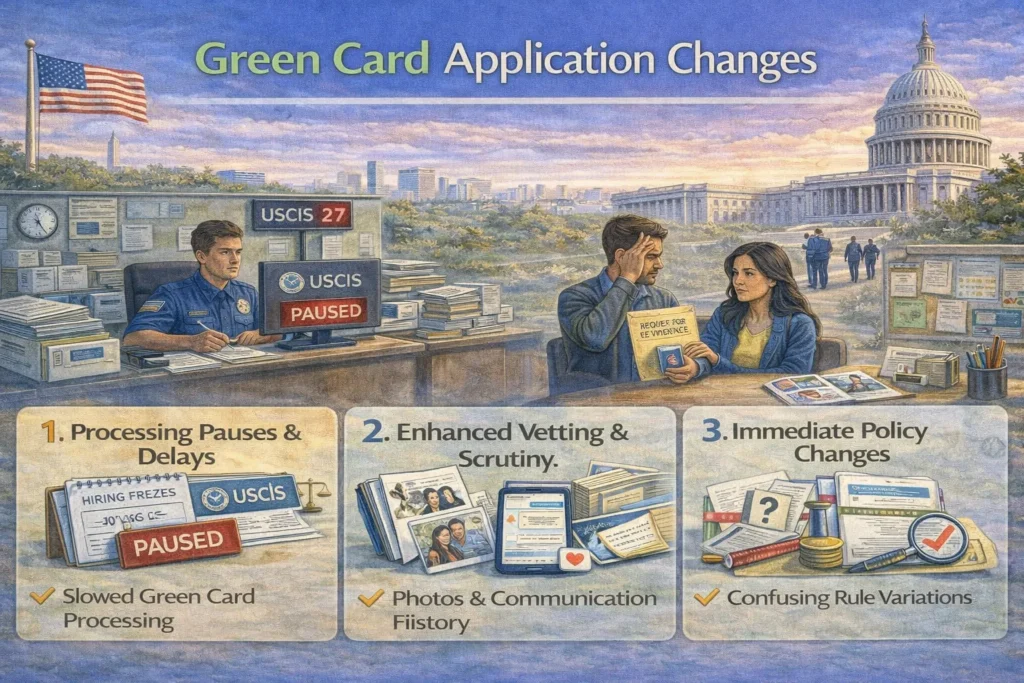
Processing Pauses and Delays
One of the biggest frustrations for applicants was time.
Green card processing slowed significantly during the Trump years. Several factors contributed:
- Hiring freezes at agencies
- New background check layers
- Temporary pauses during policy reviews
- COVID-related shutdowns in 2020
Imagine applying for a driver’s license, but every desk at the office suddenly asks for one more form. The process still works, but it moves slower.
Many applicants reported waiting months longer than expected, even for routine cases.
Enhanced Vetting and Scrutiny
Enhanced vetting became a key theme.
Applicants often faced:
- More Requests for Evidence (RFEs)
- Longer interviews
- Deeper review of work history and finances
- Extra checks for travel history
This did not mean automatic rejection. It meant more questions before approval.
For many people, this felt stressful. But legally, most of these checks were allowed under existing immigration law.
Immediate Policy Changes and Effective Dates
Some changes took effect quickly, while others were challenged in court and delayed.
For example:
- Public charge rules expanded briefly, then were blocked, then reinstated, then reversed later
- Certain processing pauses applied only to overseas applicants
- Some rules varied based on visa category
This created confusion. What applied to one applicant did not always apply to another.
Impact on Green Card Applicants
Who Is Affected by Policy Changes
Not all applicants were affected equally.
Higher impact groups included:
- Family-sponsored applicants
- Applicants adjusting status inside the U.S.
- Employment-based applicants from high-demand countries
- Applicants with limited financial documentation
Low-risk cases still moved forward, but often more slowly.
Think of it like road construction. Some lanes stayed open, but traffic slowed for everyone.
Application Status and Uncertainty
Uncertainty was one of the hardest parts.
Many applicants asked:
- Should I apply now or wait?
- Will my case be denied under new rules?
- Will the policy change again next year?
The truth is that immigration policy often changes with administrations. The Trump period highlighted how quickly enforcement priorities can shift.
Impact on Current Green Card Holders
Travel Restrictions and Reentry Concerns
Green card holders were not banned from travel, but many were cautious.
Concerns included:
- Delays at ports of entry
- Extra questioning by border officers
- Fear of being denied reentry after long trips
Technically, green card holders retained the right to reenter the United States. However, long absences or unresolved legal issues could raise red flags.
It was similar to having a valid train ticket but knowing inspections were stricter than before.
Deportation, Revocation, and Legal Safeguards
A common question was: Can Trump deport green card holders?
The short answer is not without legal process.
Green cards can be revoked only if:
- Fraud is proven
- Certain serious crimes are committed
- Immigration laws are violated
The Trump administration increased enforcement, but legal protections still applied. Immigration courts, appeals, and due process remained in place.
Safety and Rights Under Current Policy
Green card holders retained key rights:
- The right to work
- The right to due process
- The ability to apply for citizenship if eligible
Fear was widespread, but mass revocation of green cards did not occur.
Green Card Policies for Students and Graduates
International Students and Eligibility
International students often enter the U.S. on F-1 visas. A green card usually comes later through employment or family sponsorship.
Under Trump:
- Student visas faced stricter review
- Optional Practical Training rules were discussed but not eliminated
- Employment-based green cards faced higher scrutiny
Students were not barred from green cards, but the path felt narrower.
College Graduates and Employment Pathways
Graduates relying on employer sponsorship faced challenges:
- Higher denial rates for H-1B visas
- Stricter wage and role requirements
- More RFEs
Think of it like applying for a job where the interview became tougher, not impossible.
Official Statements and Clarifications
Government agencies emphasized compliance and legal entry. No official policy banned students from becoming permanent residents.
Marriage-Based Green Cards
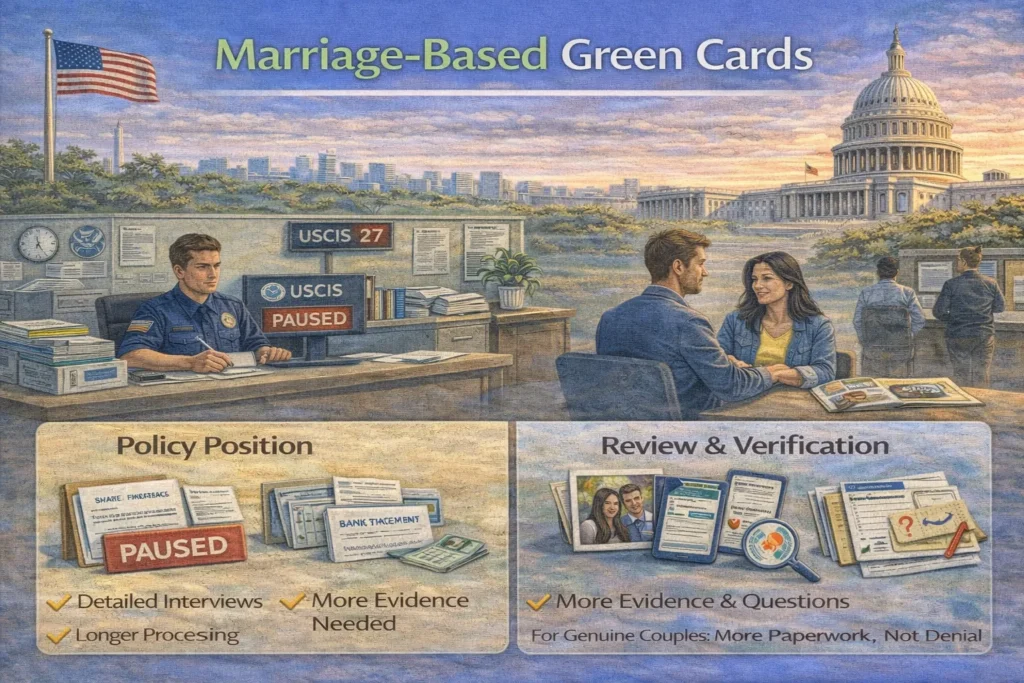
Policy Position on Family Immigration
Marriage-based green cards continued throughout the Trump administration.
However, the administration expressed concern over fraudulent marriages. As a result:
- Interviews became more detailed
- Evidence requirements increased
- Processing times grew longer
Review, Compliance, and Verification
Couples were often asked for:
- Shared financial records
- Photos and communication history
- Proof of cohabitation
For genuine couples, this meant more paperwork, not denial.
Travel Bans and Country-Based Restrictions
Entry and Visa Restrictions
The Trump administration introduced travel bans affecting several countries.
These bans mainly targeted:
- Tourist visas
- Student visas
- Certain immigrant visas
Green card holders from affected countries were later exempted, but initial confusion caused anxiety.
Countries Impacted and Scope
Countries were added and removed over time based on security reviews. The scope changed repeatedly after court challenges.
Exceptions and Special Cases
Exceptions existed for:
- Lawful permanent residents
- Certain humanitarian cases
- Special interest waivers
Legal Challenges and Public Response
Lawsuits and Policy Opposition
Many Trump-era immigration policies were challenged in court.
Federal judges blocked or delayed:
- Public charge expansions
- Some travel restrictions
- Certain processing suspensions
This created a back-and-forth effect, where rules changed, paused, then resumed.
Government Responses and Statements
Agencies such as U.S. Citizenship and Immigration Services and the Department of Homeland Security issued frequent updates to clarify enforcement.
Applicants had to stay informed to avoid relying on outdated information.
Latest Trump Green Card News
Recent Announcements
Even after Trump left office, discussions around his immigration policies continue, especially during election cycles.
Many rules introduced during his term have since been reversed or modified, but court cases and public debate still reference them.
Policy Promises vs. Implementation
Some promised reforms, such as a full merit-based system, were never enacted into law.
This shows the difference between political messaging and actual policy change.
Ongoing Developments
Immigration policy evolves with each administration. What matters most is the current rule in force, not past headlines.
Key Takeaways for Applicants and Holders
What to Monitor
If you are a green card applicant or holder, focus on:
- Official agency announcements
- Court rulings
- Processing time updates
- Travel advisories
Avoid relying solely on social media or rumors.
Preparing for Policy Changes
The best approach is preparation:
- Keep documents updated
- Maintain lawful status
- Track travel history
- Seek reliable information
Immigration policy is like weather. You cannot control it, but you can carry an umbrella.
Final Thoughts
The Trump green card era was marked by tighter enforcement, slower processing, and increased scrutiny. However, the legal foundation of the green card system remained intact.
Applicants were not banned by default. Green card holders were not stripped of rights without due process. The system became harder to navigate, not impossible.
Understanding this distinction helps cut through fear and misinformation. Immigration is complex, but with clear information and patience, it remains manageable.
Staying informed is not optional. It is essential.
Also Read: How To Renew Indian Passport in Japan
Also Read: How To Renew Indian Passport in Sweden


0 Comments