


You want to invest in the Indian stock market. Maybe it is the company you grew up with, now a giant. Or a new tech startup that everyone is talking about.
But you live in Dubai. Or New York. Or Singapore.
The question hits you. How do I, as an NRI, even start? The rules seem confusing. The paperwork feels overwhelming.
I have been there. I remember staring at forms, wondering about PIS, NRE, and NRO. It felt like learning a new language.
This guide is for you. We will walk through the process together, one simple step at a time. We will break down the jargon, list the exact documents you need, and compare the top providers. Let us get your NRI Demat account opened.
What is an NRI Demat Account — Benefits & PIS vs Non-PIS
A Demat account is like a bank account for your shares. Instead of holding physical share certificates, your securities are held electronically. For NRIs, there are two main types of Demat accounts: NRE (Non-Resident External) and NRO (Non-Resident Ordinary).
NRE Demat Account: This account is for NRIs who want to invest in Indian markets using foreign earnings. The funds in this account are fully repatriable, meaning you can transfer the money back to your foreign account.
NRO Demat Account: This account is for managing income earned in India, such as rent, dividends, or pension. The repatriability of funds is limited and subject to certain conditions.
PIS vs Non-PIS: PIS (Portfolio Investment Scheme) allows NRIs to invest in Indian stocks under the RBI’s portfolio investment scheme. Non-PIS accounts are for those who do not wish to trade on a repatriable basis.
Eligibility & RBI Rules for NRI Demat Accounts
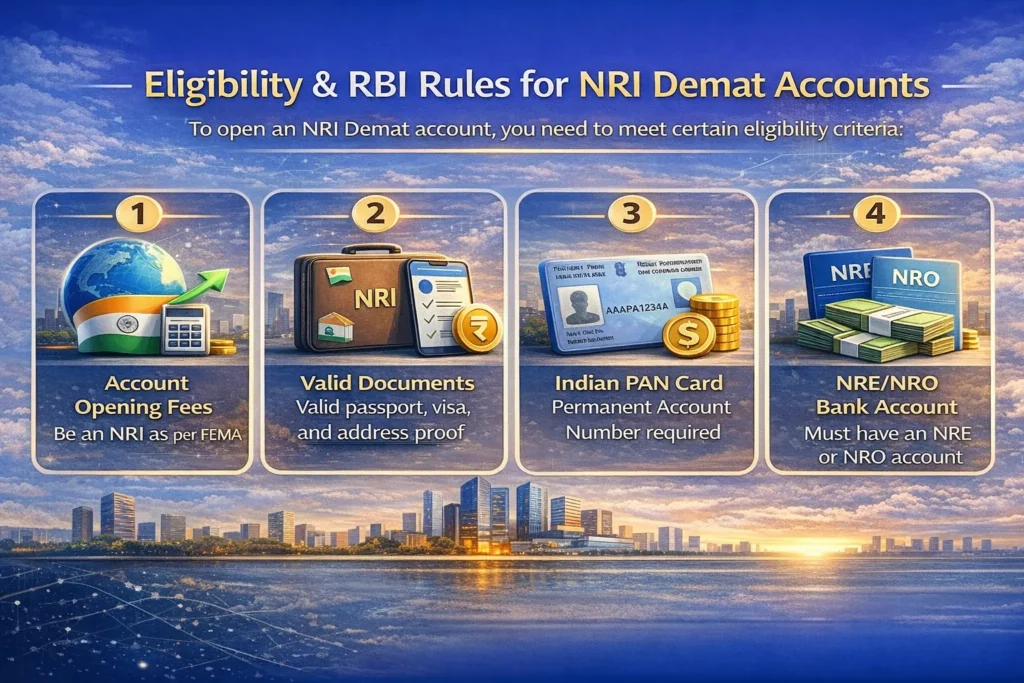
To open an NRI Demat account, you need to meet certain eligibility criteria:
- Residential Status: You must be an NRI as per the Foreign Exchange Management Act (FEMA).
- Valid Documents: You need a valid passport, visa, and overseas address proof.
- Indian PAN Card: A Permanent Account Number (PAN) card is mandatory.
- NRE/NRO Bank Account: You must have an NRE or NRO bank account in India.
Step-by-Step: How to Open an NRI Demat Account
Choose between NRE vs NRO & PIS vs Non-PIS
First, decide whether you need an NRE or NRO account based on your income source and repatriation needs. Then, choose between PIS and Non-PIS based on your trading preferences.
Select a Broker / Depository Participant
Choosing the right broker is crucial. Look for brokers who offer NRI Demat accounts and compare their fees, services, and customer support. Some popular brokers include Zerodha, SBI, ICICI Direct, and IDFC FIRST.
Complete Application & KYC (Online & Offline)
Fill out the application form provided by your chosen broker. You will need to complete the Know Your Customer (KYC) process, which involves submitting your personal details and documents.
In-Person Verification (IPV) & Document Attestation
Some brokers require in-person verification. This can be done at the broker’s office or through a video call. You may also need to get your documents attested by an authorized entity.
Link to NRE/NRO Bank & Receive PIS Letter from Designated Bank
Link your Demat account to your NRE or NRO bank account. If you have opted for a PIS account, you will receive a PIS letter from your designated bank, which allows you to trade on a repatriable basis.
Required Documents for NRI Demat / Trading Account
Here are the documents you typically need:
- Passport: A copy of your valid passport.
- Visa: A copy of your valid visa.
- Overseas Address Proof: Utility bills, bank statements, or any other document that proves your overseas address.
- Indian PAN Card: A copy of your PAN card.
- Passport-Sized Photographs: Recent photographs.
- NRE/NRO Bank Statement: A copy of your bank statement.
- PIS Permission Letter: If you are opening a PIS account.
Typical Charges & Annual Maintenance (Brokerage, AMC, Custodian Fees)
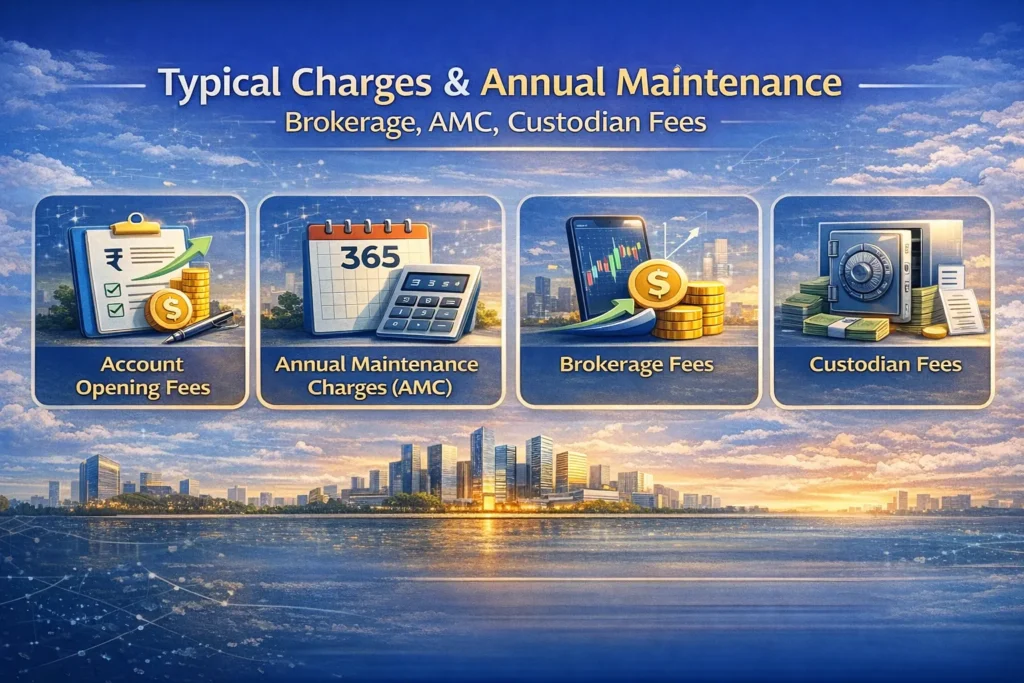
Opening and maintaining a Demat account involves certain charges:
- Account Opening Fees: Some brokers charge a one-time fee for opening the account.
- Annual Maintenance Charges (AMC): This is a yearly fee for maintaining your Demat account.
- Brokerage Fees: These are charges for buying and selling securities.
- Custodian Fees: Some brokers charge a fee for holding your securities.
Top Providers & Best Demat Account Options for NRIs
Zerodha
Zerodha is a popular choice among NRIs for its low fees and user-friendly platform. They offer both NRE and NRO Demat accounts and have a straightforward onboarding process.
SBI
State Bank of India (SBI) is a trusted name in banking and offers comprehensive NRI Demat account services. They provide both online and offline account opening options.
ICICI Direct
ICICI Direct is known for its robust trading platform and excellent customer support. They offer a range of investment options and have a dedicated NRI desk.
IDFC FIRST
IDFC FIRST offers a seamless account opening process and competitive fees. They provide both PIS and Non-PIS accounts and have a user-friendly mobile app.
Differences: NRI Demat vs Resident Demat Account
Let us make it crystal clear.
| Feature | NRI Demat Account | Resident Demat Account |
|---|---|---|
| Bank Link | Must be linked to an NRE/NRO account | Linked to a regular savings account |
| Regulation | Governed by RBI’s FEMA rules | Governed by standard SEBI rules |
| PIS | Required for direct equity trading | Not applicable |
| Repatriation | Possible through NRE route | Not applicable (funds are domestic) |
| Documentation | Requires passport, visa, attestation | Requires Aadhaar, PAN, Voter ID etc. |
| Charges | Has additional PIS and custodian fees | Generally lower maintenance fees |
FAQs
Can I open an NRI Demat account online from abroad?
Yes, many brokers offer online account opening facilities for NRIs. You can complete the process from abroad, but you may need to get your documents attested and verified.
What are the restrictions under the PIS scheme?
Under the PIS scheme, NRIs can invest in a limited number of stocks and are subject to certain trading restrictions. You need to route your investments through a designated bank.
How often do I need to update my KYC?
KYC updates are typically required every few years. Your broker will notify you when it’s time to update your KYC details.
Conclusion
Opening an NRI Demat account is a straightforward process if you follow the steps outlined in this guide. Choose the right type of account, select a reliable broker, and ensure you have all the necessary documents. With the right preparation, you can start investing in the Indian stock market and grow your wealth.
Also Read: International Schools in India


0 Comments